Meet Officer Cooper
Your Quilt Prep Assistant
Before your quilt arrives, Officer Cooper is here to help you avoid the most common issues we see at drop-off—like backing that’s too small or seams that don’t hold.
A few simple checks now can save time, prevent frustration, and help your quilt turn out beautifully.
🚨 Quilt Police On Duty 🚨
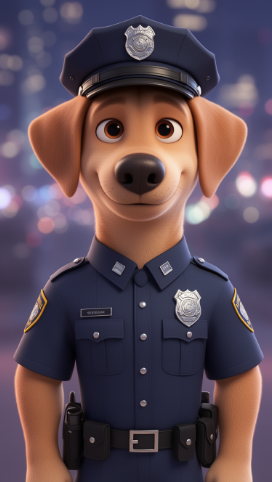
Meet Officer Cooper — our official Quilt Police representative.
He patrols the studio 24/7, keeping an eye on backing sizes, loose seams, and the occasional suspicious amount of pet hair.
Don’t worry… he’s very friendly. He never issues tickets, but he does deliver hugs.
Be sure to watch his videos throughout the page.
Sometimes the biggest obstacle in quilting… is overthinking. In this video, we talk about how to move forward with confidence, trust your work, and enjoy the process without second-guessing every detail. Quilting should feel rewarding—not stressful.
-
This is Officer Cooper of the Quilt Police…
and we need to talk about overthinking.I’ve received a report that you may be worrying… just a little too much.
Let’s take a closer look at the situation.
If I can’t spot the problem from across the room…
it might not be a problem.If I have to squint… tilt my head… and walk in for a closer look…
we’re officially in “you’re being too hard on yourself” territory.Quilting is meant to be enjoyed.
Not inspected under a microscope…
not second-guessed every five minutes…
and definitely not something that should steal your joy.Most small imperfections disappear in the finished quilt.
Once it’s quilted… washed… and loved…those tiny details you noticed?
They blend right in with everything else —and no one sees them but you.
No need to worry… we’ve seen this before.
And just between us…
every experienced quilter has been exactly where you are right now.You’re doing better than you think.
Officer Cooper… over and out.
🚨 Quick Tip Before You Scroll 🚨
If you’re not sure about something—don’t worry.
Most issues are easy to fix once you know what to look for.
You’ll find everything you need below, step by step.
Quilt Top & Backing
Before your quilt arrives, there are just a few simple things to check. Getting these right helps your quilt load smoothly and stitch out beautifully.
✔ Quilt Top Checklist
Make sure your quilt top is pressed and lays flat
Trim loose threads (especially dark threads behind light fabrics)
Check seams—if any feel loose, reinforce them before your appointment
Your quilt should be square and free of large wrinkles or puckers
✔ Backing Requirements (Important)
Your backing fabric needs to be larger than your quilt top so it can be properly loaded onto the frame.
👉 Please add at least 6 inches on all four sides
Example:
If your quilt top is 60” x 70”
Your backing should be at least 72” x 82”
Backing that is too small can delay your project or require additional fabric. Need some quick math on how to calculate that? Use our calculator:
Preparing your Quilt
“I’ve seen this situation before…
backing’s a little tight.
We’re gonna need more room to work with here…”
We see this situation frequently. Just a little extra time, a few measurements, and everything will be fine.
-
This is Officer Cooper of the Quilt Police…
and we need to talk about your quilt backing.I’ve received a report that your quilt may be arriving soon…
and I need to ask you a very important question.Is your backing ready?
Now, this is where things can go wrong—
more often than you might think.Your backing needs to be larger than your quilt top.
How much larger?
we’re talking about 6 inches on all four sides.That gives us the space we need
to properly load your quilt on the machine.Your batting should be about the same size as your backing.
nice and even. No surprises.And just as important—
your backing should be straight and square.If your backing shows up looking a little… questionable—
I may need to open an investigation.
The good news?
This is easy to fix ahead of time.
A quick trim… a little measuring…and you’re good to go.
You’re doing just fine.
No citations will be issued, but we may request back-up fabric.
Officer Cooper… over and out.
Quilt Batting Choices
Batting Options
We offer a variety of batting options to suit your quilt’s look, feel, and intended use.
If you’re not sure what to choose, don’t worry—we’re happy to help you decide when you come in.
✔ What to Expect
Batting is available for purchase at your appointment
We’ll help you choose the best option based on your quilt
You don’t need to bring batting unless you already have a preference. We recommend using quality batting that quilts smoothly and evenly. Very fluffy, high-loft polyester batting is not compatible with our quilting process.
✔ If You’re Bringing Your Own Batting
Batting should be at least 6” larger on all sides than your quilt top —- or, the same size as your backing.
Make sure it is clean, smooth, and free of folds or wrinkles
✔ If You Plan to Finish Your Binding by Hand
If you’d like to finish your binding by hand, we’re happy to attach it to the front of your quilt so it’s ready for you to complete.
2½″ strips of fabric
Strips should be sewn together using 45° mitered seams
Press the full strip in half lengthwise (wrong sides together)
✔ What We Do
We attach your prepared binding to the front of your quilt
Your quilt will be ready for you to hand-stitch the binding to the back
✔ If You Want Us to Finish the Binding
✔ What We Do
Cut 3″ wide strips for double-fold binding
Cut 1¾″ wide strips for single-fold binding
Questions? Bring your fabric and we will take it from there.
✔ Helpful Tips
Use fabric that complements your quilt top or backing
Make sure your seams are secure before your appointment
Keep your binding neatly folded or rolled to avoid wrinkles
Binding Options
Ready to transform your quilt into a masterpiece? Click the button below to schedule your personalized appointment today! Let's bring your quilting vision to life.